
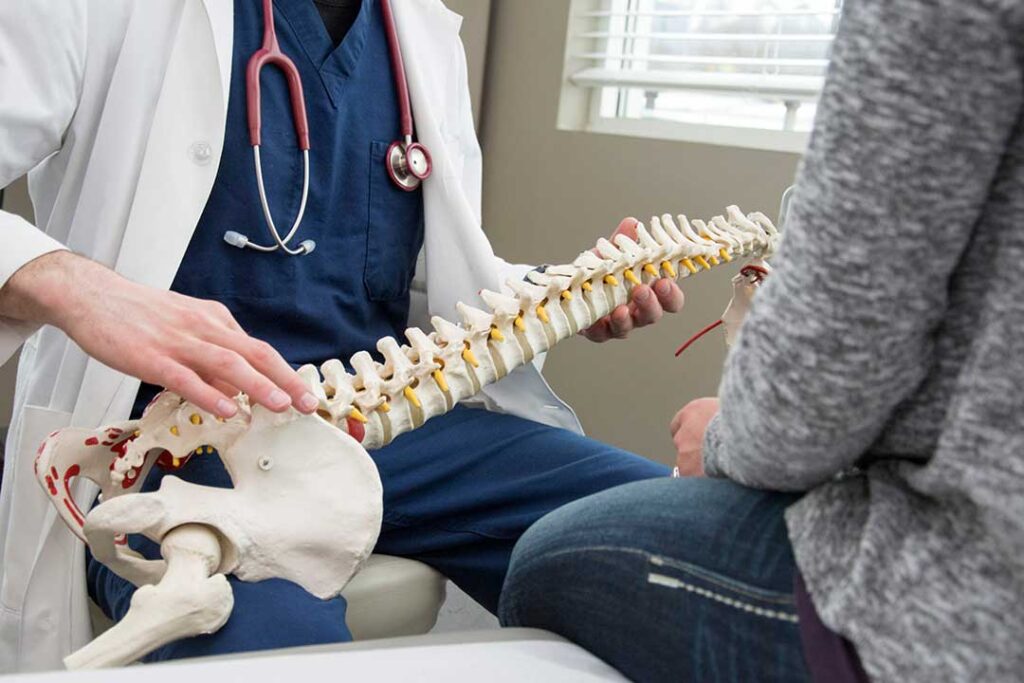
Back pain is common, but many widely repeated beliefs about it are incomplete or inaccurate. Understanding what symptoms usually mean—and which warning signs require prompt medical attention—can help local residents make calmer, safer decisions.
Myth: Severe back pain always means serious damage
Usually, pain intensity does not perfectly measure the amount of tissue damage. A strained muscle, irritated joint, or sensitive nerve can cause significant discomfort without representing a dangerous condition. Pain can also be influenced by poor sleep, stress, fear of movement, and previous episodes.
Most uncomplicated episodes of acute low back pain improve over time. That does not mean the pain should be dismissed. It means the first step is often a careful history and physical examination rather than assuming the spine has been permanently injured.
Serious causes are uncommon, but symptoms deserve prompt evaluation when back pain occurs with:
- New loss of bladder or bowel control
- Numbness around the inner thighs or groin
- Progressive weakness in a leg or foot
- Fever, unexplained weight loss, or feeling systemically ill
- A major fall, crash, or other significant trauma
- A history of cancer or a condition that weakens the immune system
These warning signs can indicate nerve compression, infection, fracture, or another condition requiring timely medical assessment. ([pmc.ncbi.nlm.nih.gov](https://pmc.ncbi.nlm.nih.gov/articles/PMC6848394/?utm_source=openai))
Myth: Bed rest is the fastest way to heal
Extended bed rest is generally not the preferred treatment for ordinary back pain. Staying in bed for long periods can lead to stiffness, reduced muscle conditioning, poorer sleep, and increased worry about movement.
A better approach for many people is to modify activity without stopping all movement. Short walks, gentle position changes, and regular movement around the home may be more helpful than remaining still for most of the day. Activity should be adjusted to symptoms rather than forced through severe pain.
During winter in Cheektowaga, NY, people may spend more time indoors, shovel snow, or move awkwardly on icy walkways. These conditions can contribute to sudden strain. After a flare-up, light movement and gradual return to normal activities are often more practical than complete inactivity.
Myth: An MRI or X-ray is always needed
Routine imaging is not usually necessary for new, uncomplicated low back pain when there are no warning signs. X-rays and MRI scans can show disc bulges, arthritis, or other age-related changes that are also present in people without pain. Those findings may create unnecessary fear and do not always identify the actual source of symptoms.
Imaging becomes more appropriate when there are serious or progressive neurological changes, significant trauma, suspected infection or cancer, or symptoms that persist despite appropriate initial care. It may also be considered when the results would change treatment decisions. ([pubmed.ncbi.nlm.nih.gov](https://pubmed.ncbi.nlm.nih.gov/17909209/?utm_source=openai))
The absence of immediate imaging does not mean symptoms are being ignored. In many cases, monitoring progress and examining movement, strength, sensation, and reflexes provides more useful information during the early stage.
Myth: A “slipped disc” means the spine has gone out of place
The phrase “slipped disc” can make it sound as though a disc has completely moved out of position. In reality, discs are flexible structures between the vertebrae, and problems may involve irritation, bulging, or herniation.
A disc change on an image does not automatically explain back pain. Some people have disc bulges without symptoms, while others have pain caused by muscles, joints, nerves, or several factors at once.
Symptoms that travel from the back into the buttock or leg may suggest nerve irritation. Numbness, tingling, or weakness deserves a more thorough evaluation, particularly if it is worsening.
Myth: Chiropractors only “put bones back in place”
Chiropractic care is sometimes described using the idea that vertebrae repeatedly go out of alignment and must be put back. That explanation is too simplistic.
Assessment may include posture, joint motion, muscle function, activity habits, and neurological symptoms. Depending on the situation, conservative care may involve education, movement recommendations, manual techniques, and exercises. Spinal manipulation is one non-drug option included in clinical guidance for some types of low back pain, but it is not appropriate for every person or every diagnosis. ([acponline.org](https://www.acponline.org/acp-newsroom/american-college-of-physicians-issues-guideline-for-treating-nonradicular-low-back-pain?utm_source=openai))
A responsible evaluation should also recognize when symptoms fall outside routine musculoskeletal care. Progressive weakness, bowel or bladder changes, fever, major trauma, or suspected fracture requires medical assessment rather than repeated treatment for presumed mechanical pain.
Myth: Exercise will damage an already painful back
For most people with nonspecific back pain, carefully selected movement is not harmful and may improve function. The right level depends on the person’s symptoms, health history, strength, balance, and current activity level.

Helpful starting points may include:
- Brief, comfortable walks
- Gentle mobility exercises
- Gradual strengthening of the hips and trunk
- Changing positions regularly during deskwork or household tasks
- Returning slowly to lifting, gardening, or recreational activities
Pain that remains mild and settles after activity is different from worsening leg weakness, increasing numbness, or severe pain that does not ease. Exercise should be scaled back when symptoms escalate and reconsidered if problems persist.
Myth: Good posture prevents all back pain
Posture matters, but there is no single perfect sitting or standing position that prevents every episode. Holding any position for too long—including an upright one—can cause discomfort. People also vary in body shape, work demands, flexibility, and tolerance for sustained positions.
For residents working from home, driving, or spending long periods seated, practical changes may include bringing frequently used items within reach, supporting the feet, changing positions, and taking brief movement breaks. In homes with stairs, basement storage, or seasonal equipment, lifting technique and pacing may matter more than trying to maintain a rigid posture.
Myth: Pain medication is the only effective treatment
Medication can be useful for some people, but it is not the only option and is not automatically the best first step. Heat, exercise, education, massage, spinal manipulation, and other non-drug approaches may be considered based on the type and duration of pain.
Over-the-counter medications are not risk-free. Anti-inflammatory drugs can be unsuitable for some people with kidney disease, ulcers, heart conditions, high blood pressure, pregnancy, or medication interactions. A pharmacist or medical clinician can help determine whether a medicine is appropriate.
Opioids are not a routine solution for ordinary back pain. Non-opioid approaches can be effective for many common acute pain conditions and generally avoid the risks associated with opioid medicines. ([cdc.gov](https://www.cdc.gov/overdose-prevention/hcp/clinical-care/nonopioid-therapies-for-pain-management.html?utm_source=openai))
Myth: Recurring back pain means the spine is steadily deteriorating
Repeated episodes do not necessarily mean the spine is progressively failing. Recurrence can reflect reduced conditioning, repetitive work, sudden increases in activity, poor sleep, stress, or incomplete recovery after an earlier episode.
A useful plan focuses on function: identifying movements that aggravate symptoms, rebuilding strength gradually, improving sleep and activity habits, and recognizing warning signs. Persistent or recurring pain should be reassessed when it changes character, interferes with daily activities, or is accompanied by neurological symptoms.
The most reliable message is neither “ignore back pain” nor “fear every sensation.” Most episodes benefit from sensible movement, appropriate monitoring, and an evaluation that matches the symptoms rather than the myths surrounding them.
